Industrial Floor Systems for Woodbridge's I-95 Distribution Corridor and Route 1 Service Operations
The distribution center off Horner Road near the I-95 and Potomac Mills interchange runs three shifts and cannot section the floor on a Tuesday morning without shutting down receiving. The auto service operation on Route 1 with six bays has concrete so saturated with petroleum that standard degreaser just pushes it around. The light manufacturing facility along Prince William Parkway has a forklift lane that cracked a commercial epoxy topcoat in the first three months because whoever spec'd it used a residential system at commercial price. These are the Woodbridge industrial jobs we take on, and none of them start with picking a color before we assess what the slab is actually dealing with.
Why Woodbridge industrial operators specify correctly the first time
Industrial floors in the eastern Prince William County corridor have two distinct failure modes, and both are common enough on Woodbridge projects that we treat them as default assumptions until the assessment proves otherwise. The first is petroleum contamination: Route 1 auto service bays, fleet maintenance operations, and tire shops have concrete that has absorbed petroleum products, hydraulic fluid, and brake cleaner for years or decades. The contamination is not a surface film. It is in the pore structure of the slab, and applying a coating over it without industrial-grade degreasing and mechanical profiling produces a floor that delaminates in the first season regardless of system quality.
The second failure mode is load mismatch: distribution centers and logistics facilities in the Horner Road industrial parks and along Prince William Parkway see sustained forklift, pallet-jack, and loaded-cart traffic that standard commercial epoxy systems are not built to handle. A commercial topcoat is 10 to 20 mils. A forklift with a loaded pallet applies several thousand pounds of point load on hard-rubber tires across every shift. That combination produces cracking and delamination within months on a system that was not specified for the load. We start by mapping traffic paths and measuring the actual load before we recommend anything.
How we handle industrial projects in Woodbridge and Prince William County
Industrial floor services in Woodbridge and Prince William County
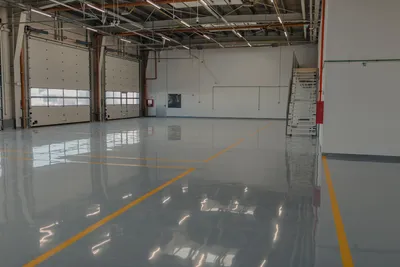
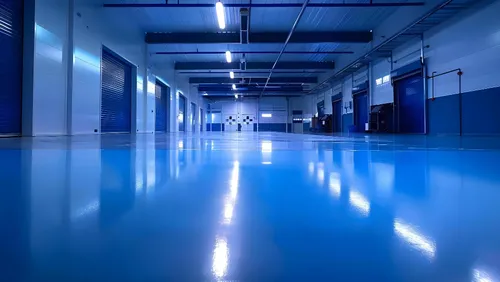
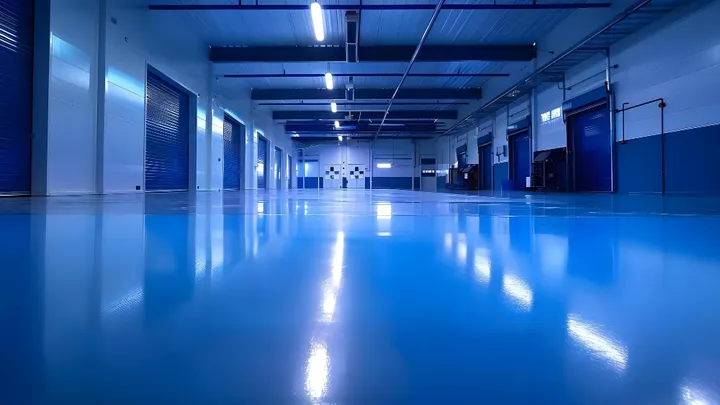
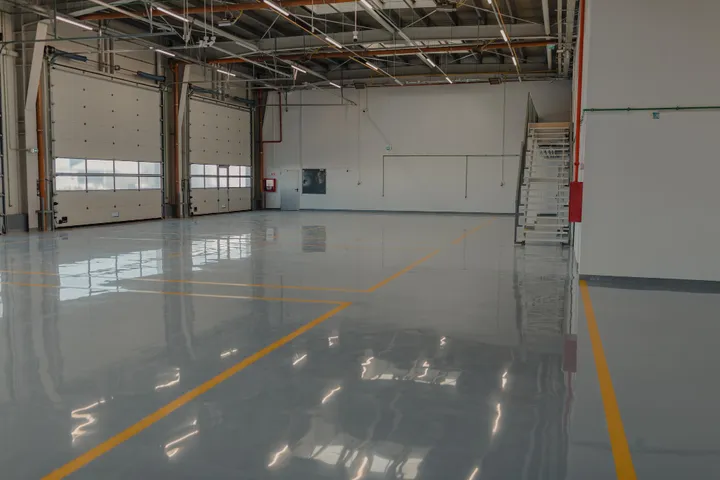
Distribution and logistics facilities off Horner Road and near the I-95 Potomac Mills interchange. Auto service bays and fleet maintenance on Route 1. Light manufacturing and storage floors on Prince William Parkway. Systems spec'd for the actual contamination level, load, and operational schedule.
Browse all industrial services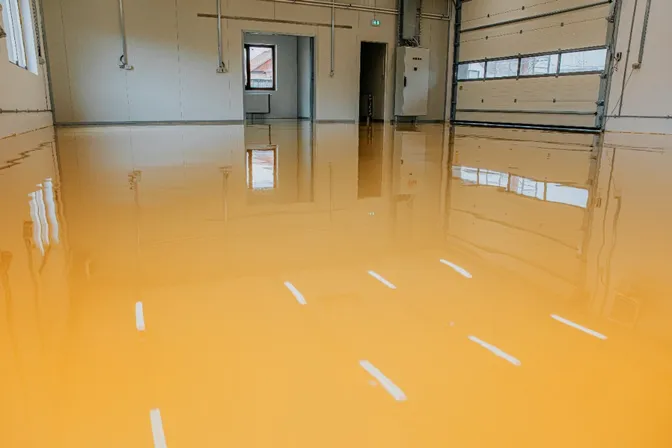
Warehouse
Epoxy flooring for warehouses. Forklift-resistant, chemical-resistant, and built for heavy use.
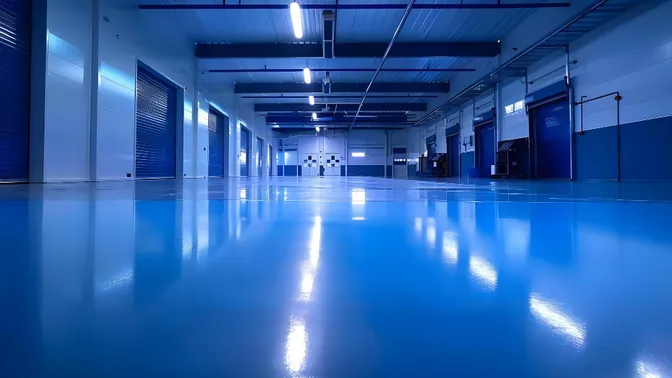
Factory
Epoxy for factories and manufacturing. Chemical and impact resistant, durable under heavy equipment.
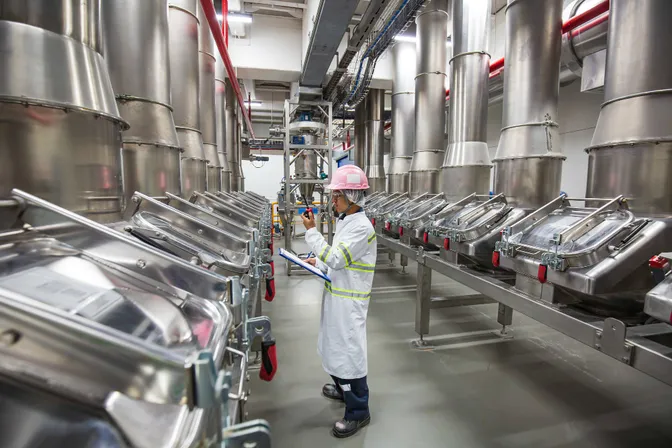
Food Processing
Food-grade epoxy for processing facilities. FDA-compliant, slip-resistant, easy to clean.
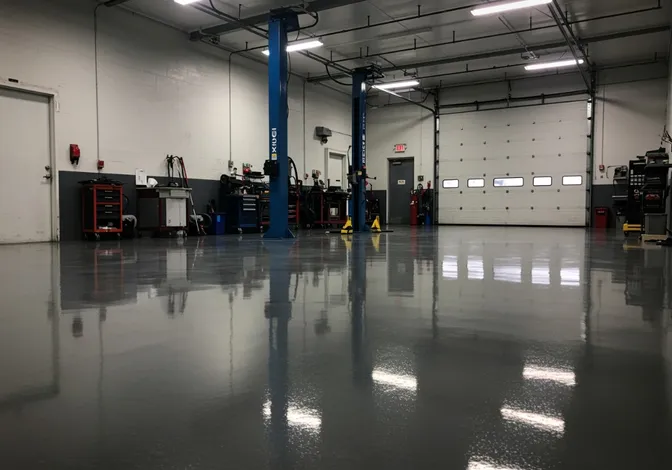
Auto & Mechanical Shop
Epoxy for auto shops and mechanical shops. Oil and chemical resistant, durable under lifts and equipment.
What every Woodbridge industrial job includes
Key Benefits
- Industrial degreasing and adhesion testing before primer on petroleum-saturated Route 1 service bays
- Epoxy mortar and heavy-build systems rated for the sustained forklift load in Horner Road distribution centers
- Moisture emission testing on low-elevation and Occoquan-adjacent industrial facilities before any system is specified
- Thermal-shock-rated topcoats for vehicle service environments with daily temperature cycling
- Phased section-by-section install to keep active operations running throughout the project
Ideal For
Auto service and fleet maintenance operators on Route 1 with oil-saturated concrete that has defeated every previous coating attempt, distribution and logistics facility managers in the Horner Road and Potomac Mills interchange industrial parks who need forklift-rated floors without shutting down operations to install them, and light manufacturing operators on Prince William Parkway who need systems that hold up under the actual load the facility runs every shift.
What to Expect
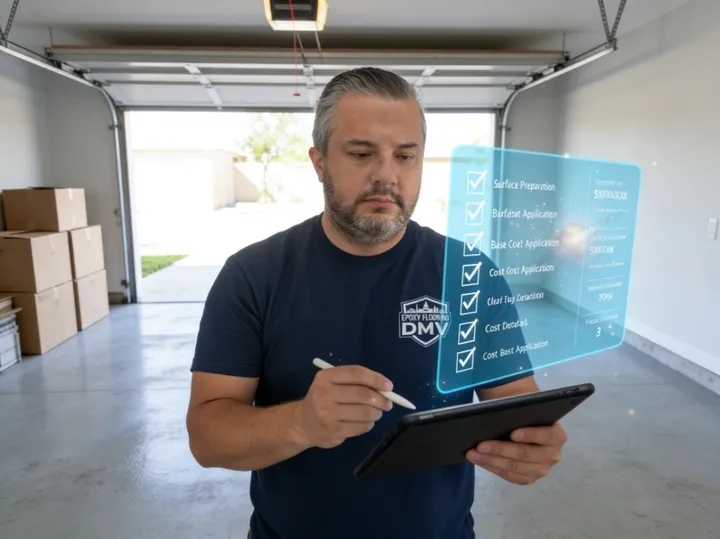
On-site assessment and contamination testing before any quote. Written scope with prep depth, system spec, and phased installation plan. Active floor zones maintained throughout. Full cure confirmed before each section returns to load. Written spec and maintenance documentation at project close.
Industrial Floor Coating Options
Epoxy mortar, urethane cement, polished concrete, and high-build epoxy. We select the system that fits your warehouse, factory, or food processing floor for heavy traffic and chemical resistance.
View all coating options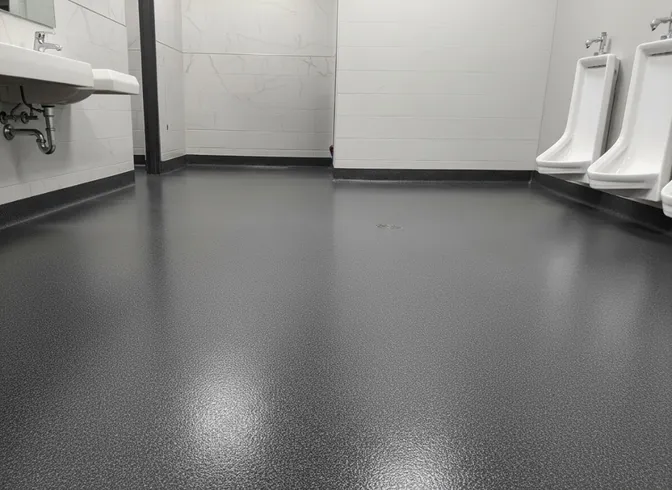
Urethane Cement
Handles the thermal cycling and chemical exposure in Route 1 restaurant kitchens and auto service bays. The right spec for any industrial or food-service environment that sees temperature swings and chemical contact daily.
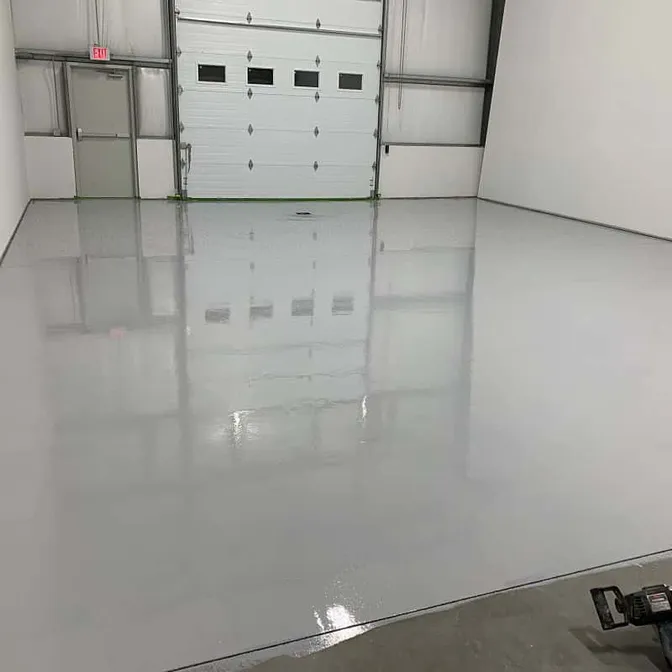
Epoxy Mortar
Structural-grade build for Horner Road distribution floors and logistics facilities along the I-95 corridor that take daily forklift and pallet-jack load. Not a substitute for standard epoxy on heavy-traffic industrial applications.

Polished Concrete
A strong fit for Stonebridge retail tenants, upscale restaurant dining areas, and medical office suites where a clean, low-maintenance surface matters more than color variety. Works on slabs in good structural condition.
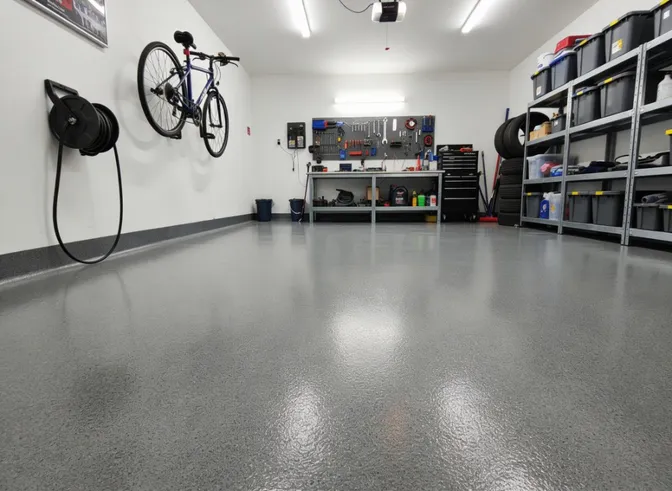
Color Quartz
Slip-resistant and chemical-tolerant. Used in medical suite restrooms and clinical prep areas near Sentara, commercial kitchen zones in Route 1 restaurants, and restroom floors in high-traffic retail spaces at Potomac Mills.
Workmanship Warranty Included
We stand behind every installation with a written warranty. Quality materials, proper prep, and expert application mean your floor is built to last.
Frequently Asked Questions
My Route 1 service bay has had coatings fail twice. What is different about what you do?
Both failures were almost certainly adhesion failures caused by petroleum contamination in the slab that was not removed before the coating went down. Applying primer over oil-saturated concrete is like trying to glue something to a greasy surface: it holds for a season at most, then lifts. We use industrial-concentration degreaser at the correct dwell time, shot-blast or grind to below the contamination layer, and then test bond strength with a pull-off test before applying primer. If the test fails, we do more prep. We do not apply a coating we cannot guarantee.
What is the difference between epoxy mortar and standard commercial epoxy for a forklift bay?
Standard commercial epoxy is applied at 10 to 20 mils total thickness. It is a surface coating, not a structural one. Epoxy mortar uses sand or quartz aggregate in the base layer to build structural depth, typically 3 to 6 millimeters, which provides the mechanical resistance that sustained hard-rubber-tire forklift load requires. The distribution and logistics floors in the Horner Road industrial parks and near the Potomac Mills interchange are in a different load category than a retail floor or even a light-vehicle garage. Specifying a thinner system on those floors because the upfront cost is lower produces floor replacement costs within 18 months.
Can you phase the install in our distribution center so we do not have to close for a week?
Yes. Phased installation is the standard approach on most Woodbridge distribution and industrial jobs. We map your layout, identify the sections that can come offline without stopping operations, and sequence the work to keep your highest-priority zones accessible throughout the project. Each section cures under its own timeline and we confirm full load-rated cure before routing traffic back through it. The total project takes longer than a single-pour approach, but the facility does not stop.
Does the prep process generate a lot of dust in an active building?
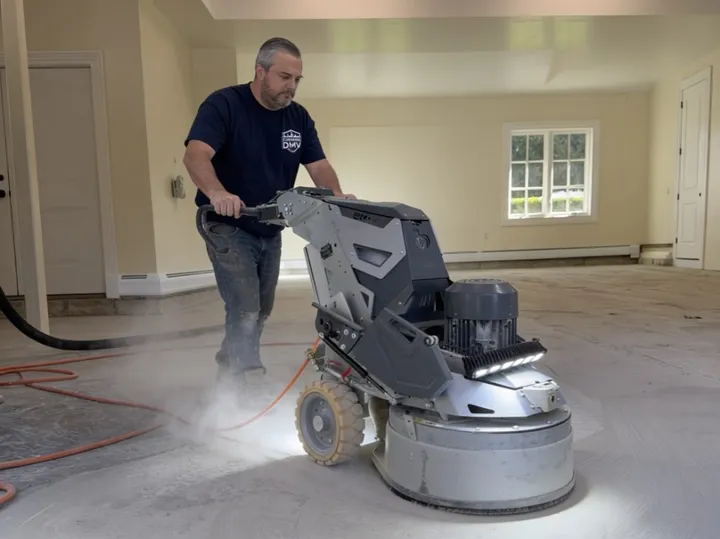
We use HEPA-filtered vacuum systems directly attached to the grinding or shot-blast equipment, and we maintain negative air pressure in the work zone when adjacent areas are occupied. For facilities with active inventory, open shelving, or sensitive equipment nearby, we coordinate the prep sequence to keep grinding away from exposed areas and use poly sheeting barriers along active aisles. We do not hand back a facility floor that requires cleanup of prep debris before the shift can restart.
My facility is low-elevation near Occoquan. Will moisture affect the industrial coating?
Possibly, and the way to find out is to test before specifying rather than after installing. We run calcium-chloride moisture emission tests on every industrial slab in the lower-elevation sections of eastern Prince William County before we commit to a system spec. If the emission rate is elevated, we apply a moisture-mitigation primer at the appropriate film build before the industrial topcoat goes down. If there is active water intrusion through the slab, that needs remediation before any floor coating is applied. We will tell you which situation you are in before we quote a system.
Can you recommend a system for a food-processing or refrigerated storage floor?
Yes. Refrigerated and cold-storage floors in Prince William County industrial buildings have specific requirements: the floor needs to handle thermal shock from frequent wash-down cycles, resist the sanitizers and cleaning chemistry used in food-safe facilities, and provide a surface that does not support bacterial growth. Urethane cement is the industry-standard specification for food-processing environments because it handles those combined demands. For refrigerated storage where the floor sees significant temperature differential between the slab and the air, the system selection also accounts for the expansion and contraction behavior of the coating under those conditions. We assess your specific temperature range and cleaning protocol before specifying.
Need a Woodbridge industrial floor built for the load your facility actually runs?
We walk the facility, assess contamination and moisture, map your traffic zones, and build a phased install plan around your operational schedule. Route 1 service corridor and I-95 distribution parks handled.
Get a quote